
How Long Should a Bedtime Story Video Be?
How long should a bedtime story video be? What suits ages 3–5, 6–8 and 9–12, how to pace narration and music, and when to split a story in two.
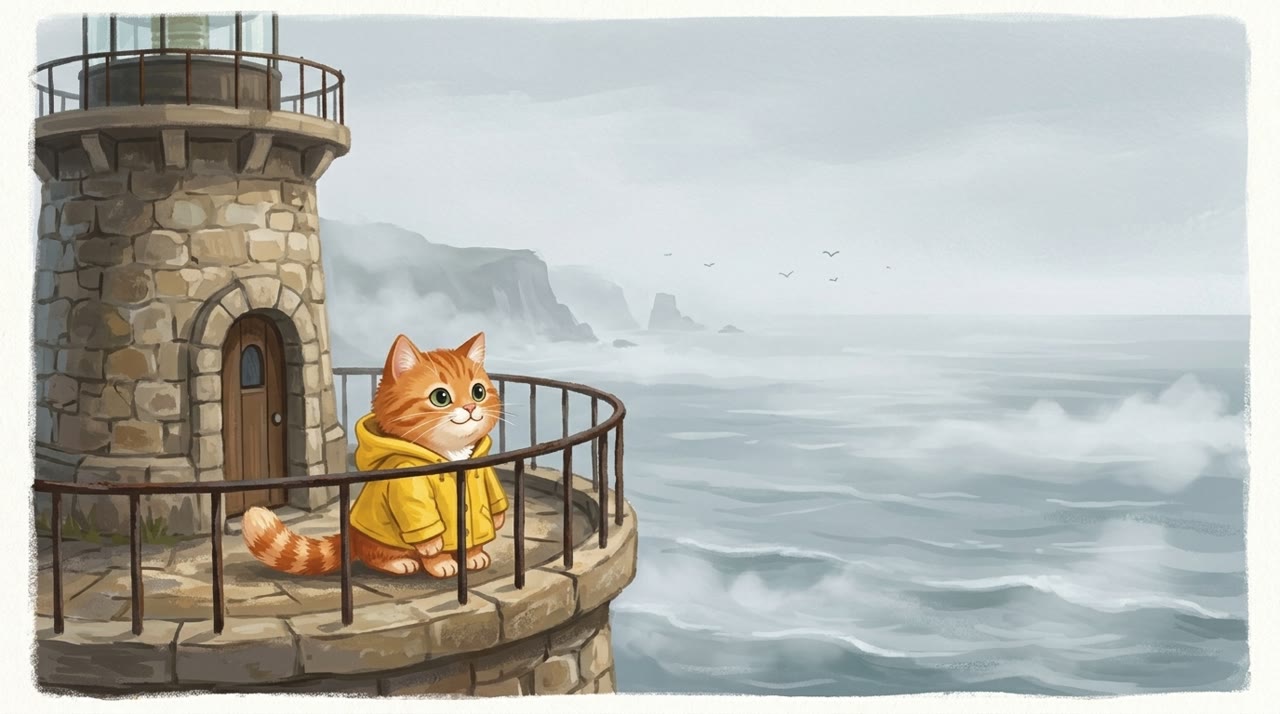
A bedtime story video should be short enough to finish before attention runs out and calm enough that it ends the day instead of starting a new one. For most children that means a few minutes for preschoolers, a little longer for early readers, and a proper chapter-length tale for older kids. The right length depends less on the clock than on how many story beats a child can hold in mind at once.
This guide walks through each age band, the pacing that helps a story wind down, and how to choose a length in Story Video, where you can pick 1, 3, 5 or 8 minutes.
What length suits each age?
There is no single correct number, and every child is different. These are starting points that work well for one story heard once at bedtime, not rules.
| Audience | A good starting length | Story shape that fits |
|---|---|---|
| Kids 3–5 | The shortest or second-shortest length | One character, one small problem, one gentle solution, lots of repetition |
| Kids 6–8 | A middle length | A main character and a friend, a simple journey with two or three steps |
| Kids 9–12 | One of the two longer lengths | A clear goal, a setback, a turn, and an ending with a thought to keep |
| General 13+ | Any length | Whatever the story needs; for winding down, the calmer the better |
The pattern is simple: younger listeners need fewer events, not just fewer minutes. A three-year-old can follow a bunny looking for her lost scarf. The same child loses the thread if the bunny also has to cross a river, meet an owl and win a race before the scarf turns up.
Why do younger children need shorter stories?
Small children are still learning to keep a sequence of events in their heads. When a story has too many moving parts, they stop following the plot and start watching the pictures, which is the opposite of settling down.
Shorter stories also leave room for the ritual around them. Many families read the same story several nights in a row; a short video that ends calmly is easy to say yes to "one more time". A long one turns into a negotiation.
Signs a story is too long for a listener:
- They ask what is happening, or who a character is, partway through.
- They start talking over the narrator or fidgeting with the screen.
- They are more awake at the end than at the start.
If you see these, choose the next length down for tomorrow, or keep the same idea and cut a scene.
How should a bedtime story be paced?
Length is only half of it. A calm story at a longer length often works better than a busy one at a shorter length. Aim for a story that slows down as it goes:
- Start with a familiar, cosy place. A bedroom, a burrow, a boat on a still lake. The opening tells the listener nothing scary is coming.
- Keep the problem small. A lost toy, a star that will not shine, a friend who cannot sleep. Bedtime is not the moment for chases or villains.
- Repeat a phrase. "And the little fox said, not yet, not yet." Repetition gives young children something to join in with and a rhythm to relax into.
- Land somewhere quiet. End the story with the character falling asleep, the lights going out, or the world going still. Let the last scene be the calmest one.
When you write your idea for the studio, say so: "a calm bedtime story where a sleepy hedgehog counts the stars" gets a gentler story than "a hedgehog's adventure in the sky".
How do music and narration help a child wind down?
A soft music bed under the narration smooths the gaps between lines and signals that this is a quiet time. In Story Video you can choose from 8 beds, such as a lullaby, a music box or a dreamy harp, or no music at all. For bedtime, pick one of the slower beds and keep it in the background.
A few habits that help:
- Choose a warm, unhurried narrator voice. A gentle or soft voice suits bedtime better than a bright, cheerful one.
- Use fewer character voices for little ones. A narrator alone, or a narrator and one character, is easier to follow at age three or four. Older children enjoy a full cast.
- Turn the screen brightness down. Watercolour, gouache or ink-wash pictures in muted colours are easier on tired eyes than saturated ones.
- Watch together the first time. You will hear straight away whether the story is too long or too lively.
When should you split a story into two nights?
If a story your child loves is longer than they can manage, split it rather than squeeze it. Make the first video end at a natural pause, when the character settles down for the night, and pick up the next evening with the same characters.
Story Video makes this easy because characters are drawn once on a character sheet and reused as references in every scene. Make the second part from the same story, keep the same character pictures, and the hero looks the same on night two as on night one.
Splitting works well for:
- Fables and folk tales with two clear halves.
- Adventure stories for older children who want "what happens next".
- Stories you wrote yourself that grew longer than planned.
How do you pick the length in Story Video?
You choose the audience and the length before the story is written, so the writing fits both:
- Type a one-line idea or paste a story you wrote. Pasted stories keep your words; the site only splits them into scenes.
- Pick the audience: Kids 3–5, Kids 6–8 (the default), Kids 9–12 or General 13+. The audience sets the vocabulary and the tone.
- Pick the length. The story is written to roughly that length of narration, and the studio shows the running time and the exact credits before you render.
- Read the scenes. Edit any line that runs long or feels too exciting for bedtime, then draw the characters and render.
Free accounts can make stories up to 3 minutes at 720p, and the free sign-up credits cover one 1-minute story with one drawn character, which is a good way to test a length with your own child. Longer stories come with the plans on the pricing page.
A quick checklist before you press render
- The story has one main problem, or two at most for older children.
- The last scene is the quietest one.
- The narrator voice is calm, and there are no more voices than your child can tell apart.
- The music bed is soft, or off.
- You have read the scene list once and cut anything that would wake a child up.
Start with a short story tonight and adjust from there. You can make one in the studio, or read more about bedtime story videos and fable videos.
Make a story video from one line
Type an idea, meet the characters, and see the exact credits before you render.